
Historically, on-treatment remission definitions in other inflammatory conditions have established a higher target for patient management.3-5
The NPF has defined on-treatment remission in PSO
In the treatment of plaque psoriasis (PSO), aim for continuous skin clearance
In the treatment of plaque psoriasis (PSO), aim for continuous skin clearance
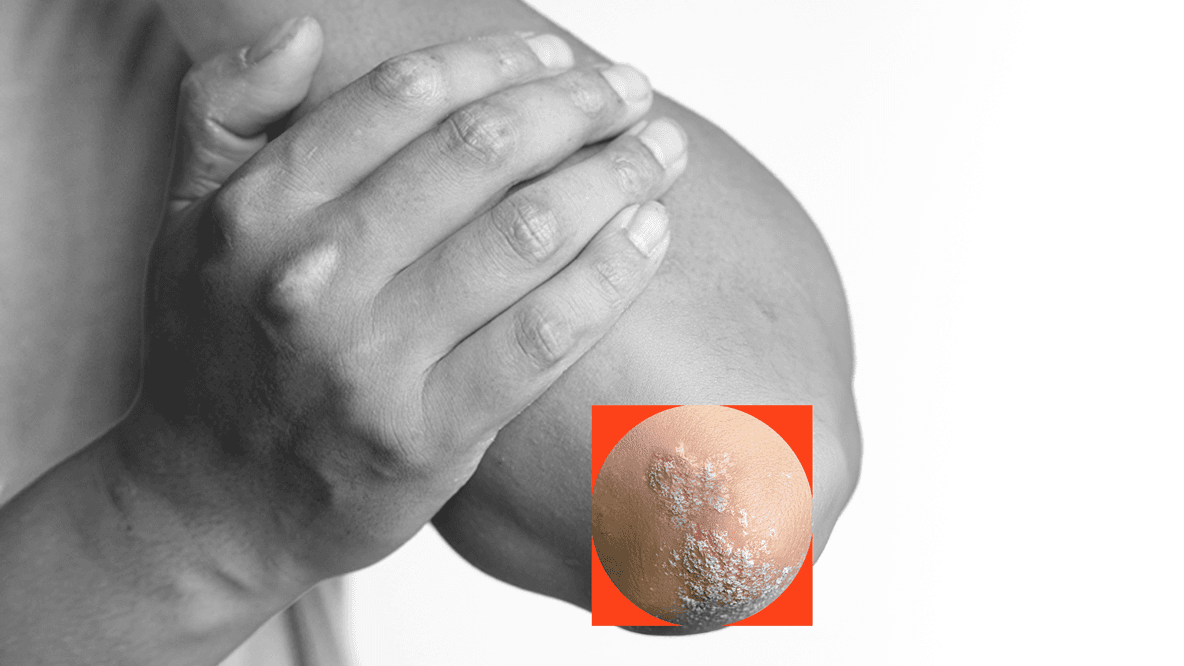
Even one lesion can have an impact on your patients' quality of life.1
The NPF consensus definition for on-treatment remission in PSO is to maintain a BSA of 0% or an IGA score of 0 for at least 6 months while on treatment.2

A consistent definition for on-treatment remission in PSO may improve clinical decisions2
A consistent definition for on-treatment remission in PSO may improve clinical decisions2
The acceptance and validation of the NPF consensus definition of on-treatment remission has not yet been established.
A treat-to-target approach has been advocated as an effective patient management strategy for patients with inflammatory conditions.3,6-7
Other inflammatory conditions such as inflammatory bowel disease, rheumatoid arthritis, and systemic lupus erythematosus have well-defined on-treatment remission criteria that establish clear treatment targets to aid clinical decision-making.3-5
The NPF determined the definition of on-treatment remission in PSO2
In 2025, the NPF established a clear, consensus-based definition of on-treatment remission in PSO to guide improved, sustained outcomes and unify patients, clinicians, researchers, and payers around a common benchmark.2
On-treatment remission in PSO2
Maintaining a BSA involvement of 0% or an IGA score of 0 for at least 6 months while on treatment
Many patients struggle to maintain continuous skin clearance8
Many patients struggle to maintain continuous skin clearance8
Real-world evidence suggests that despite achieving complete skin clearance after 6 months of treatment with a biologic, more than 1 in 4 patients lose total clearance by 12 months.8,*
30% of patients in a real-world study experienced a flare, defined in the study as a PASI score increase of 3 or more between visits of their preexisting lesions.9,†
20% of the patients who experienced a flare in the same real-world study discontinued their treatment as a result.9,†

*Data were collected from a multinational, prospective, observational study (N=846). The first patient was enrolled on March 5, 2014, and the last was enrolled on November 26, 2015, with the final 12-month follow-up completed on January 5, 2017. As with many observational studies, this study may be subject to limitations such as selection bias and potential confounders. Site selection aimed for geographic diversity but may have overrepresented metropolitan, research-focused centers, where physicians are more likely to prescribe biologics.
†Data were collected from the Danish nationwide registry, DERM-BI0, and only included biologic-naive patients (N=1684) registered since 2007. Limitations include the lack of a clear flare definition, inter-rater variability in PASI scoring, the predominance of older biologics, limited generalizability outside the Danish healthcare system, and the inability to measure patient compliance.
On-treatment remission, as defined by the NPF, may deliver lasting
patient benefits
On-treatment remission, as defined by the NPF, may deliver lasting patient benefits
Achieving complete skin clearance is associated with better outcomes for patients with PSO, even compared with patients who have almost complete skin clearance.10-12


*Data were collected from a cross-sectional survey of 146 US dermatologists and 259 patients with PSO from November 2016 to January 2017.
†Data were collected from a prospective, observational, noninterventional, cross-sectional study evaluating 230 patients in the US receiving a biologic agent to treat their moderate-to-severe PSO.
‡Data were collected from a longitudinal cohort study of 2701 patients with PSO initiated on biologic treatment, utilizing data from the CorEvitas Psoriasis Registry (April 2015 to August 2021).
The goal is clear. Explore on-treatment remission for PSO
BSA=body surface area. IGA=Investigator's Global Assessment. NPF=National Psoriasis Foundation. PASI=Psoriasis Area and Severity Index.
References: 1. Augustin M, Gottlieb AB, Lebwohl M, et al. Complete skin clearance is associated with the greatest benefits to health-related quality of life and perceived symptoms for patients with psoriasis. Dermatol Ther (Heidelb). 2024;14(10):2841-2857. doi:10.1007/s13555-024-01261-6 2. Armstrong AW, Gondo GC, Merola JF, et al. Defining on-treatment remission in plaque psoriasis: a consensus statement from the National Psoriasis Foundation. JAMA Dermatol. 2025;161(8):863-869. doi:10.1001/jamadermatol.2025.1625 3. van Vollenhoven RF, Bertsias G, Doria A, et al. 2021 DORIS definition of remission in SLE: final recommendations from an international task force. Lupus Sci Med. 2021;8(1):e000538. doi:10.1136/lupus-2021-000538 4. Turner D, Ricciuto A, Lewis A, et al. STRIDE-II: an update on the selecting therapeutic targets in inflammatory bowel disease (STRIDE) initiative of the international organization for the study of IBD (IOIBD): determining therapeutic goals for treat-to-target strategies in IBD. Gastroenterology. 2021;160(5):1570-1583. doi:10.1053/j.gastro.2020.12.031 5. Studenic P, Aletaha D, de Wit M, et al. American College of Rheumatology/EULAR Remission Criteria for Rheumatoid Arthritis: 2022 Revision. Arthritis Rheumatol. 2023;75(1):15-22. doi:10.1002/art.42347 6. Peyrin-Biroulet L, Sandborn W, Sands BE, et al. Selecting therapeutic targets in inflammatory bowel disease (STRIDE): determining therapeutic goals for treat-to-target. Am J Gastroenterol. 2015;110(9):1324-1338. doi:10.1038/ajg.2015.233 7. Hock ES, Martyn-St James M, Wailoo A, et al. Treat-to-target strategies in rheumatoid arthritis: a systematic review and cost-effectiveness analysis. SN Compr Clin Med. 2021;3(3):838-854. doi:10.1007/s42399-021-00727-4 8. Seneschal J, Lacour J-P, Bewley A, et al. A multinational, prospective, observational study to estimate complete skin clearance in patients with moderate-to-severe plaque PSOriasis treated with BIOlogics in a REAL world setting (PSO-BIO-REAL). J Eur Acad Dermatol Venereol. 2020;34(11):2566-2573. doi:10.1111/jdv.16568 9. Loft N, Egeberg A, Rasmussen MK, et al. Response to biologics during the first six months of therapy in biologic-naïve patients with psoriasis predicts risk of disease flares: a Danish Nationwide study. Acta Derm Venereol. 2021;101(1):adv00357. doi:10.2340/00015555-3722 10. Wang S, Li F. Comparison of patient-reported outcomes in patients achieving complete versus near-complete skin clearance following vunakizumab treatment: a post-hoc analysis of a phase III trial. Naunyn Schmiedebergs Arch Pharmacol. Published online August 25, 2025. doi:10.1007/s00210-025-04490-4 11. Korman NJ, Malatestinic W, Goldblum OM, et al. Assessment of the benefit of achieving complete versus almost complete skin clearance in psoriasis: a patient's perspective. J Dermatolog Treat. 2022;33(2):733-739. doi:10.1080/09546634.2020.1772454 12. McLean RR, Sima AP, Beaty S, et al. Skin clearance is associated with reduced treatment failure in patients with psoriasis: real-world evidence from the CorEvitas Psoriasis Registry. Dermatol Ther (Heidelb). 2023;13(11):2739-2751. doi:10.1007/s13555-023-01027-6